Panic Attack — Hyperventilation & Anxiety
Proper mental health first aid for panic attacks and hyperventilation to restore calm and regular breathing.
Proper mental health first aid for panic attacks and hyperventilation to restore calm and regular breathing.
Panic attack symptoms (racing heart, shortness of breath, chest tightness, numbness) closely mimic a heart attack. If the person has a history of heart disease, or if chest pain radiating to the jaw/arm persists, treat as a cardiac emergency and call 911 / 112 immediately.
Identify common panic indicators: hyperventilation (rapid, shallow breathing), trembling, sweating, racing pulse, choking sensations, and an overwhelming feeling of dread or loss of control.
Gently lead the person away from crowds, bright lights, loud noises, or triggers. Find a calm, comfortable place where they can sit down.
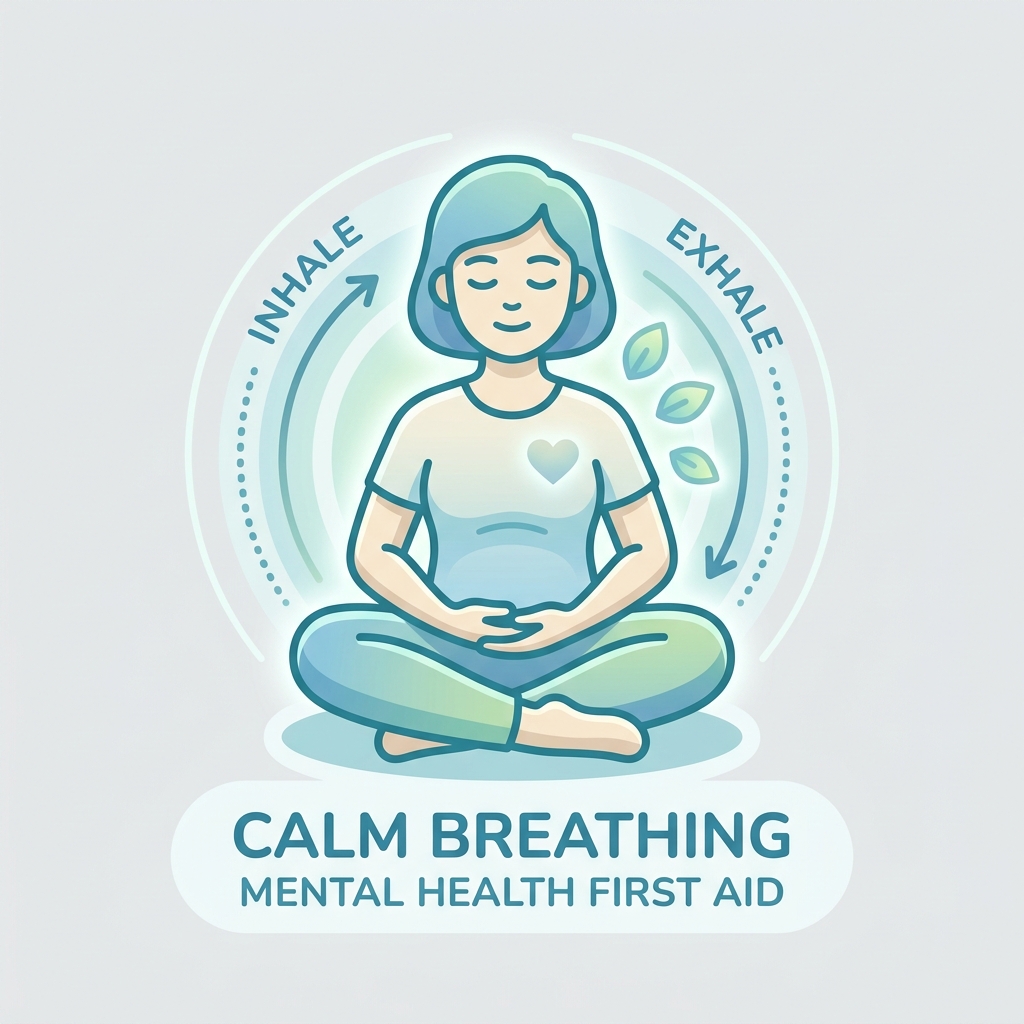
Encourage them to take deep breaths. Demonstrate the technique: inhale through the nose for 4 seconds, hold for 2 seconds, and exhale slowly through the mouth for 4 seconds. Focus on breathing together.
Help connect them back to reality with the 5-4-3-2-1 sensory method. Ask them to name: 5 things they see, 4 things they can touch, 3 things they hear, 2 things they smell, and 1 thing they taste.
Speak in a soft, steady, and quiet tone. Keep sentences short: "You are safe," "I am here with you," "This feeling is temporary and will pass shortly." Do not invalidate their fear.
Stay beside them. Do not crowd their space or make them feel trapped. If hyperventilation or severe symptoms do not improve after 20 to 30 minutes, consult a doctor.