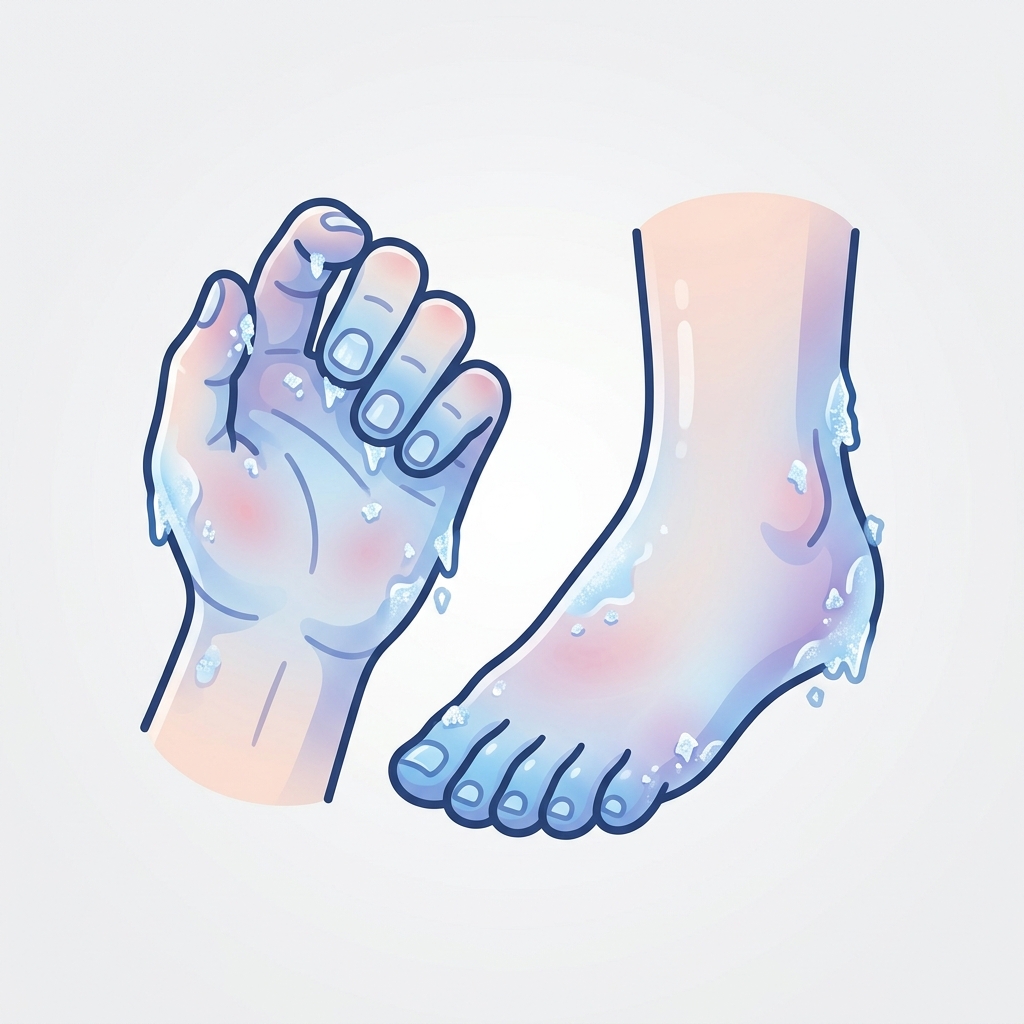
Frostbite — Cold Tissue Damage
Proper first aid for frostbite to protect damaged tissues and prevent permanent nerve and blood vessel damage.
Proper first aid for frostbite to protect damaged tissues and prevent permanent nerve and blood vessel damage.
Seek medical care immediately if you suspect frostbite. Symptoms include white, grey, or yellow skin, numbness, a hard/waxy feeling, and blisters after rewarming. Never rub or massage the skin.
Move the person to a warm, dry environment as quickly as possible. Remove all wet clothing and insulate them from the ground.
Gently take off any rings, watches, or tight boots/socks near the affected areas before swelling and inflammation begin.
Submerge the frostbitten area in warm (NOT hot) water — ideally between 100°F and 104°F (38°C–40°C). Rewarm for 20 to 30 minutes. If water is not available, use body heat (e.g., placing cold fingers in armpits).
Gently pat the skin dry. Place clean, dry sterile gauze between rewarmed fingers or toes to keep them separated and prevent friction.
Keep the rewarned limb elevated above the heart level to reduce severe swelling, pain, and throbbing as circulation returns.
Get the person evaluated by medical professionals immediately. Do not allow them to walk on frostbitten feet or toes as this causes further cell destruction.